How Much Does Video Dubbing Cost? Human vs AI Prices
Published prices for subtitles, human voice-over and AI dubbing, what drives them, worked examples for a 10-minute video, and what to ask before you pay.
On this page
Ask three vendors what video dubbing costs and you'll get three very different answers. Some quote per minute, some per word, some per project. Some include the script, the voices and the mix; some charge for each. This guide gathers published ranges, explains what moves the price, works through a 10-minute example, and lists the questions that make quotes comparable.
All outside prices here are published ranges, not quotes. Read them as a guide to the order of magnitude, and check them against the vendors you're considering.
Published price ranges
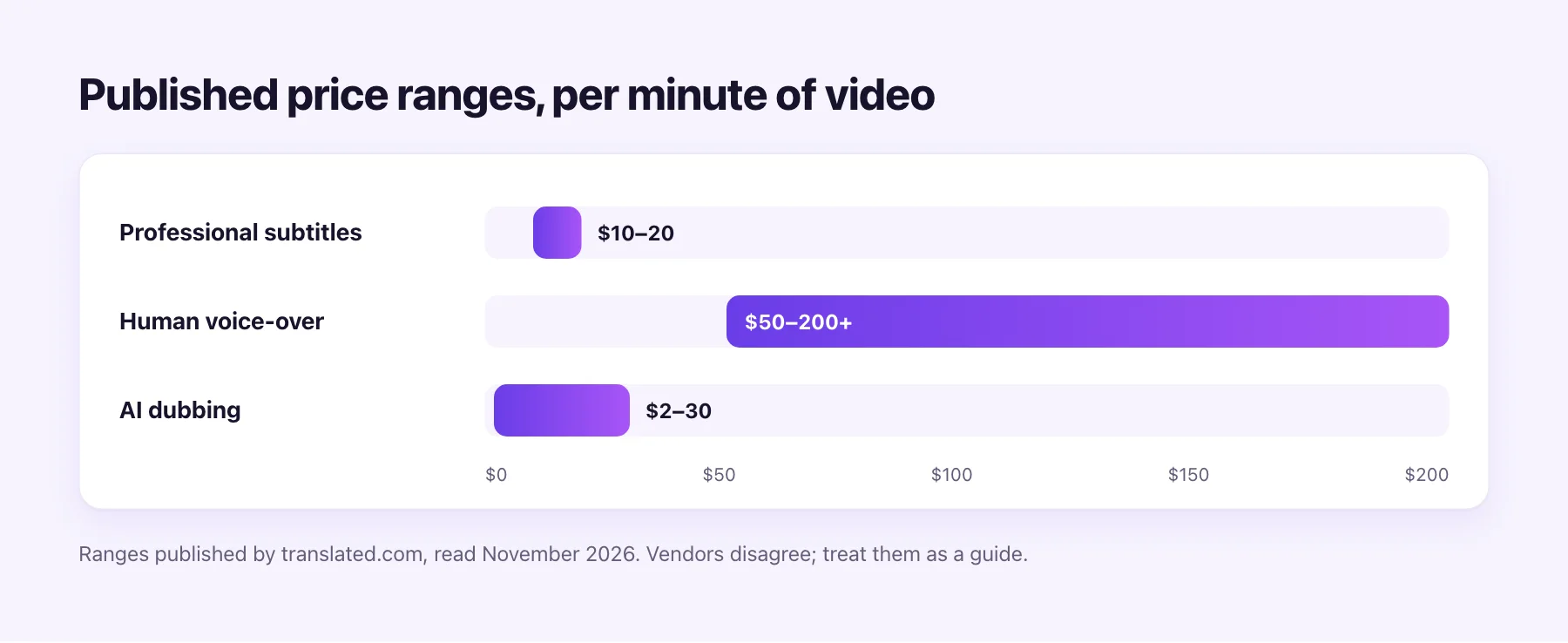
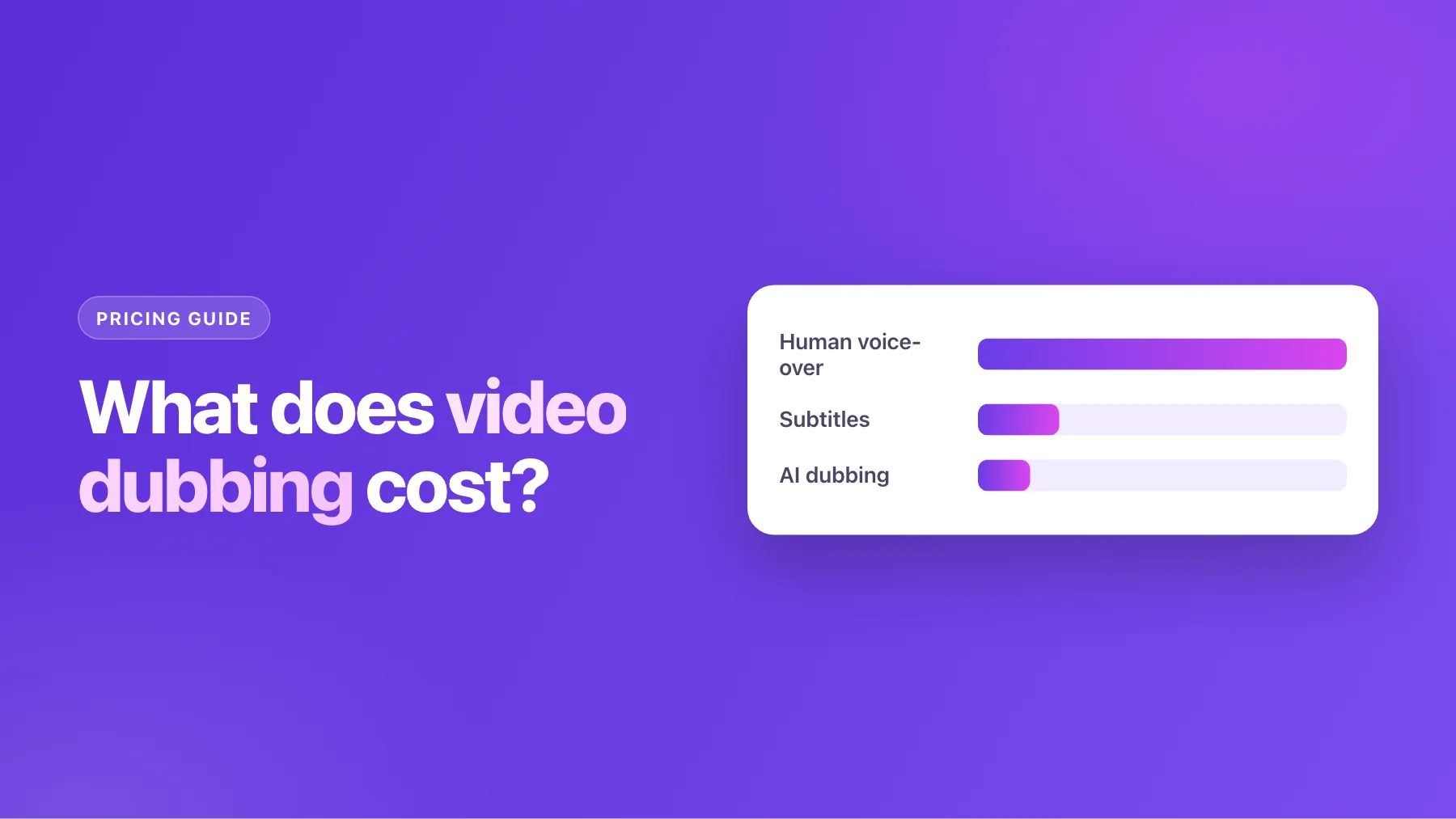
translated.com, a language-services company, publishes these ranges per minute of video:
| Service | Published range per minute |
|---|---|
| Professional subtitling | $10–20 |
| Human voice-over | $50 to over $200 per finished minute |
| AI dubbing | $2–30 |
Other vendor pages put human dubbing at roughly $20 to $200 or more per minute per language, and premium work higher. The ranges are wide because "dubbing" covers everything from one narrator reading a translated script to a cast of actors matching lip movements in a studio.
What drives the price
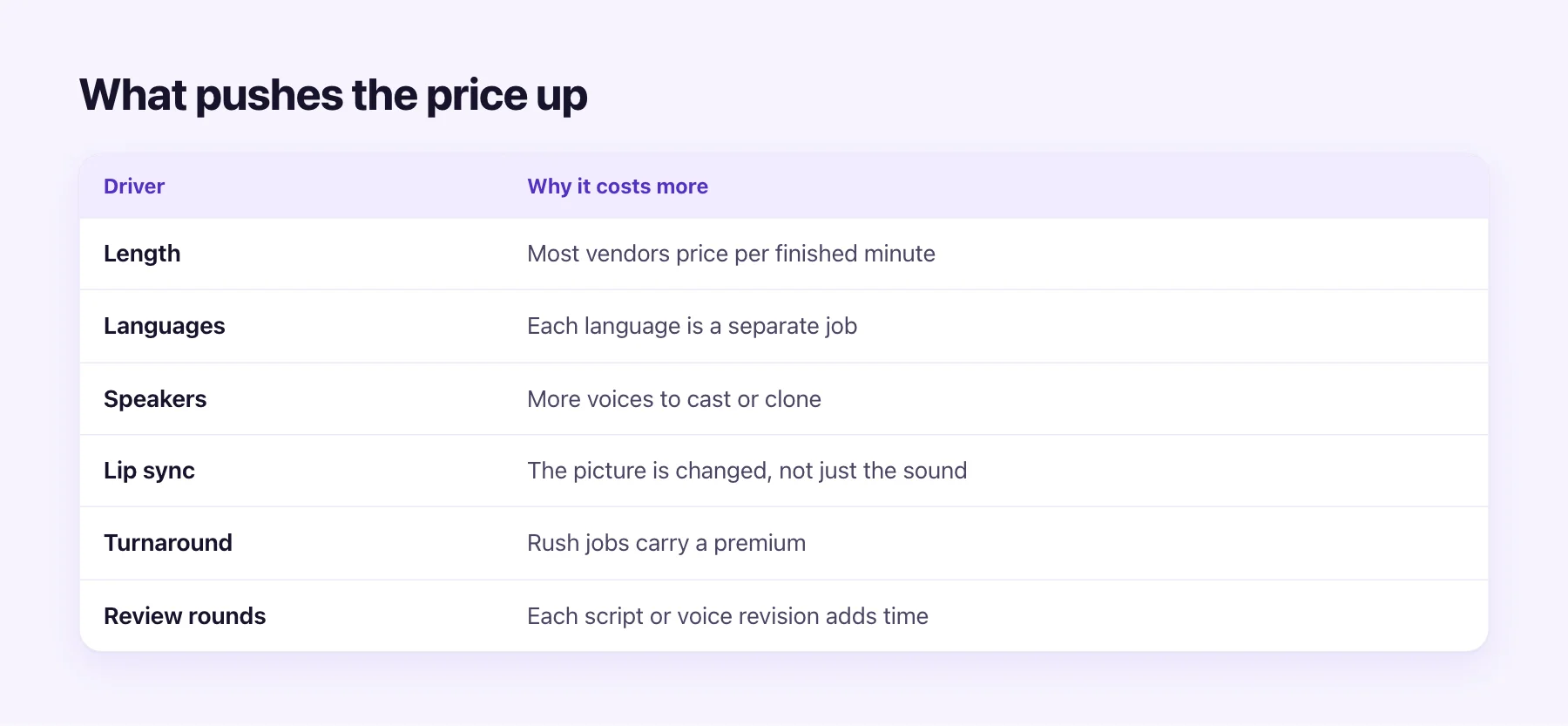
- Length. Most vendors price per finished minute, so length is the base of the quote.
- Languages. Each language is mostly a separate job: a new translation, new voices, a new mix.
- Speakers. Two speakers need two voices. With human dubbing, that's two actors.
- Lip sync. Matching the mouth changes the picture as well as the sound, and costs more in every method.
- Turnaround. Rush jobs carry a premium with human vendors.
- Review rounds. Every revision of the script or the voice adds time.
Where the money goes in a human dub
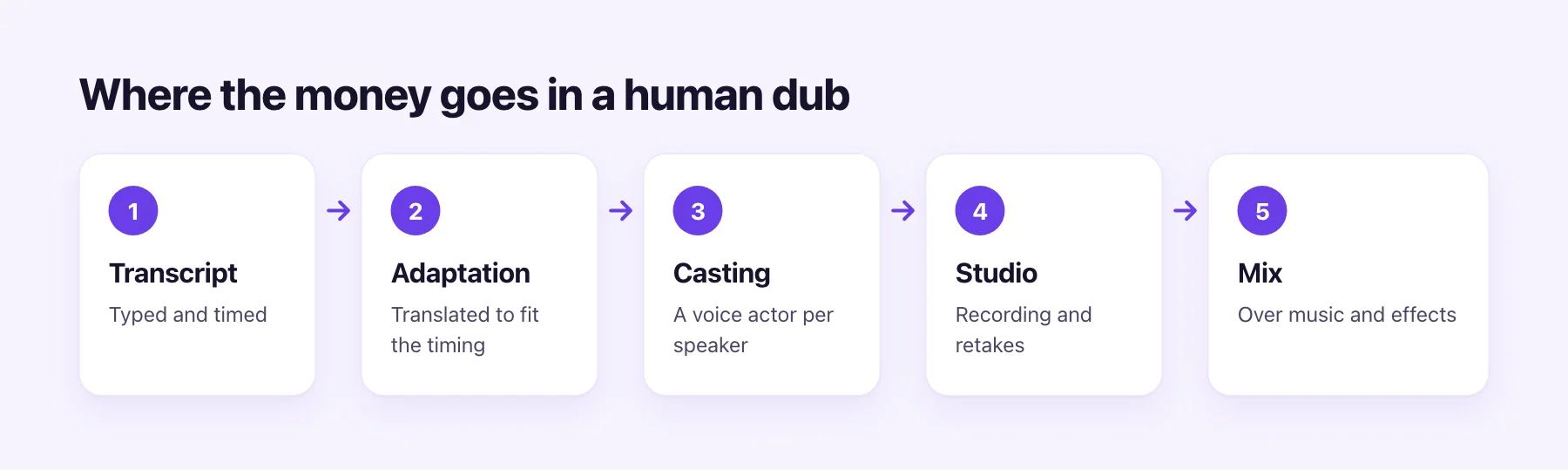
A human dub moves through five stages. The transcript is typed and timed. A translator adapts it so each line fits the time the original took, which is harder than plain translation. A voice actor is cast for each speaker. The studio session records every line, with retakes. Then an engineer mixes the new voices over the original music and effects.
Each stage has people and hours behind it, which is why human dubbing is priced in tens or hundreds of dollars per minute. For a film or a series where performance is the product, it's worth it.
How AI dubbing changes the cost
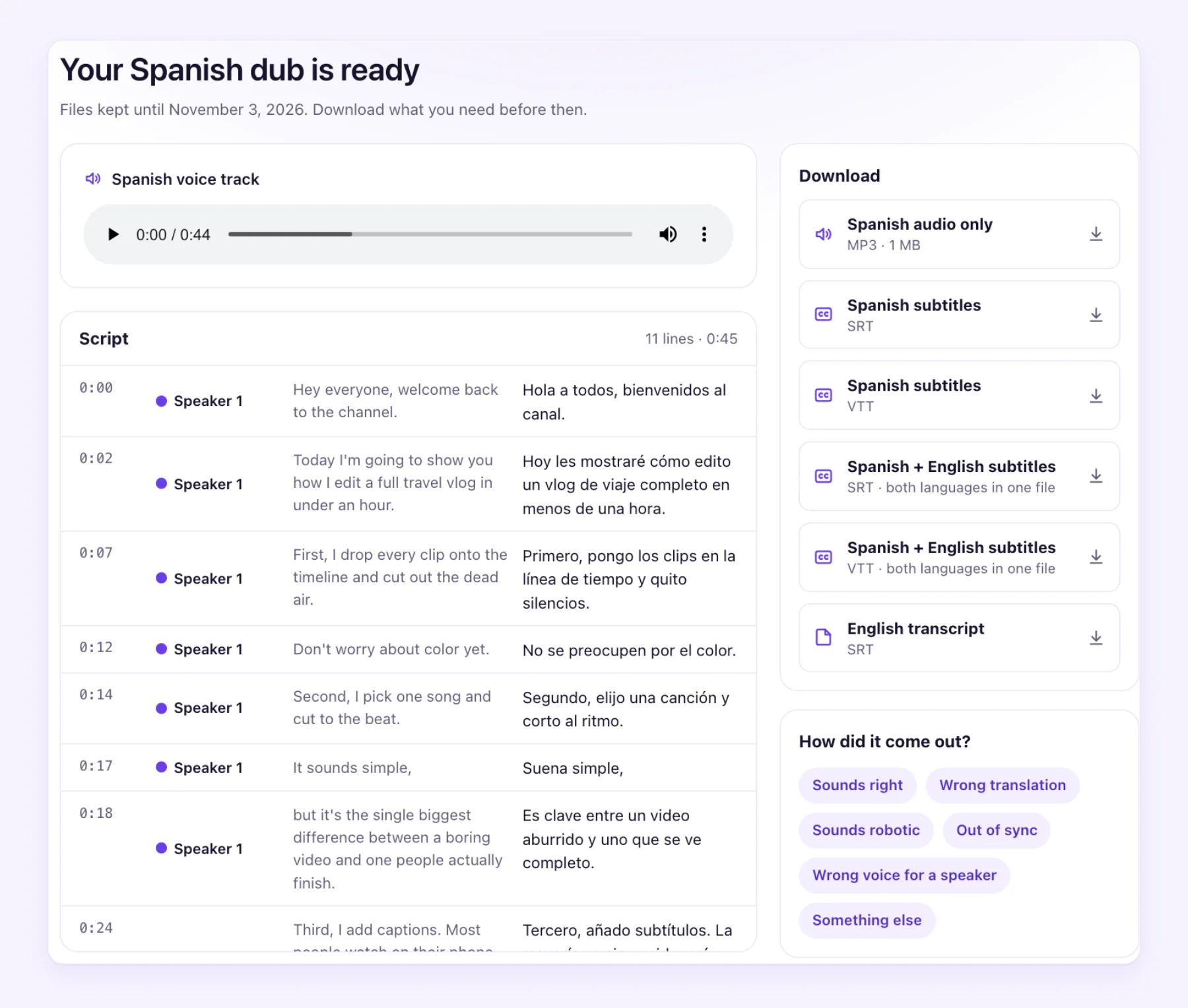
AI dubbing runs the same stages in software: speech recognition writes the transcript, machine translation adapts it line by line, a voice is learned from each speaker, and the mix keeps your original music and effects. What stays human is the review: you read the translated script and fix what needs fixing before anything is voiced.
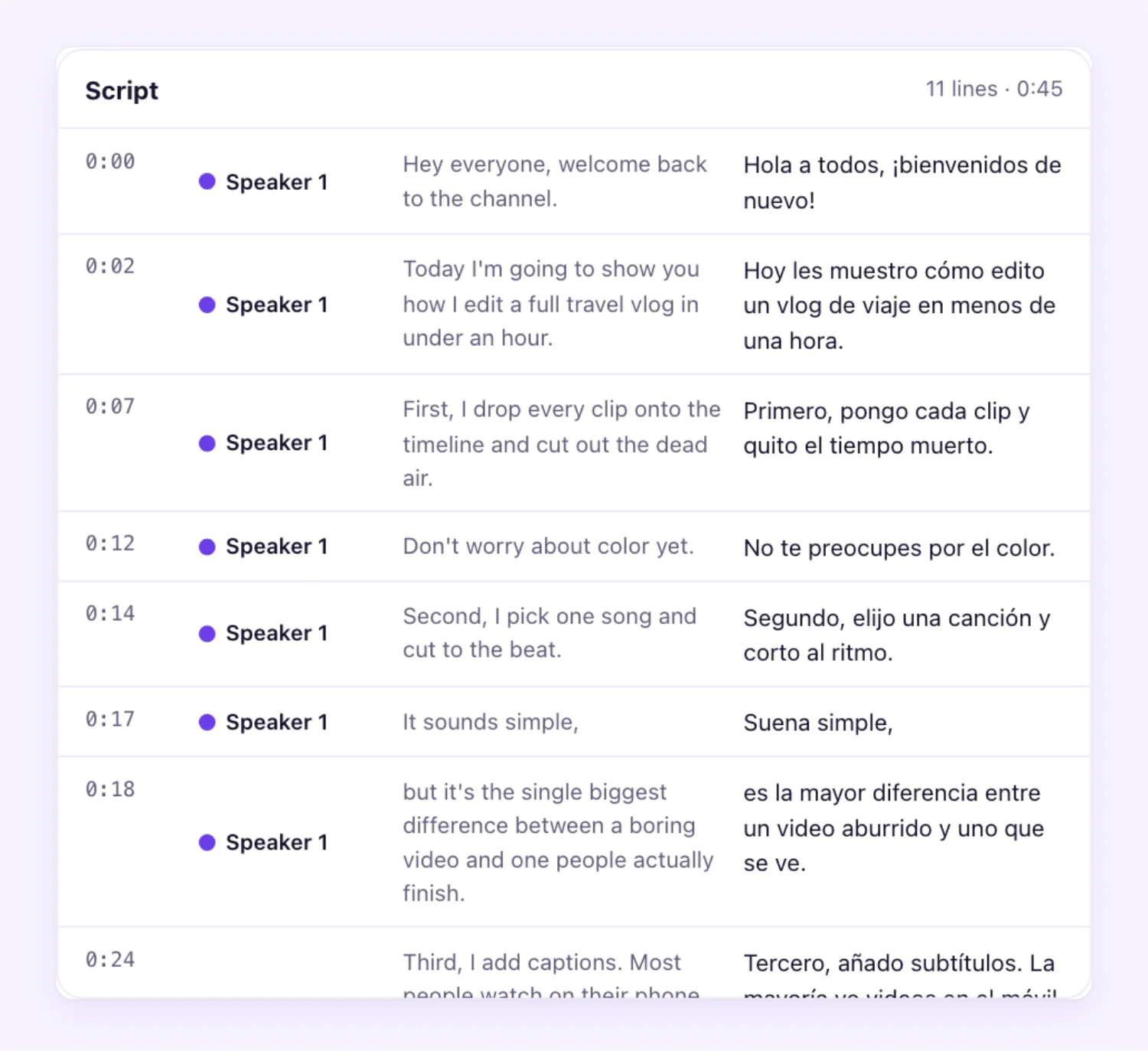
That review is the cheapest point to make changes. Fixing a line of text costs nothing. With a human vendor, re-recording a voice line means another studio session.
A 10-minute video, worked out
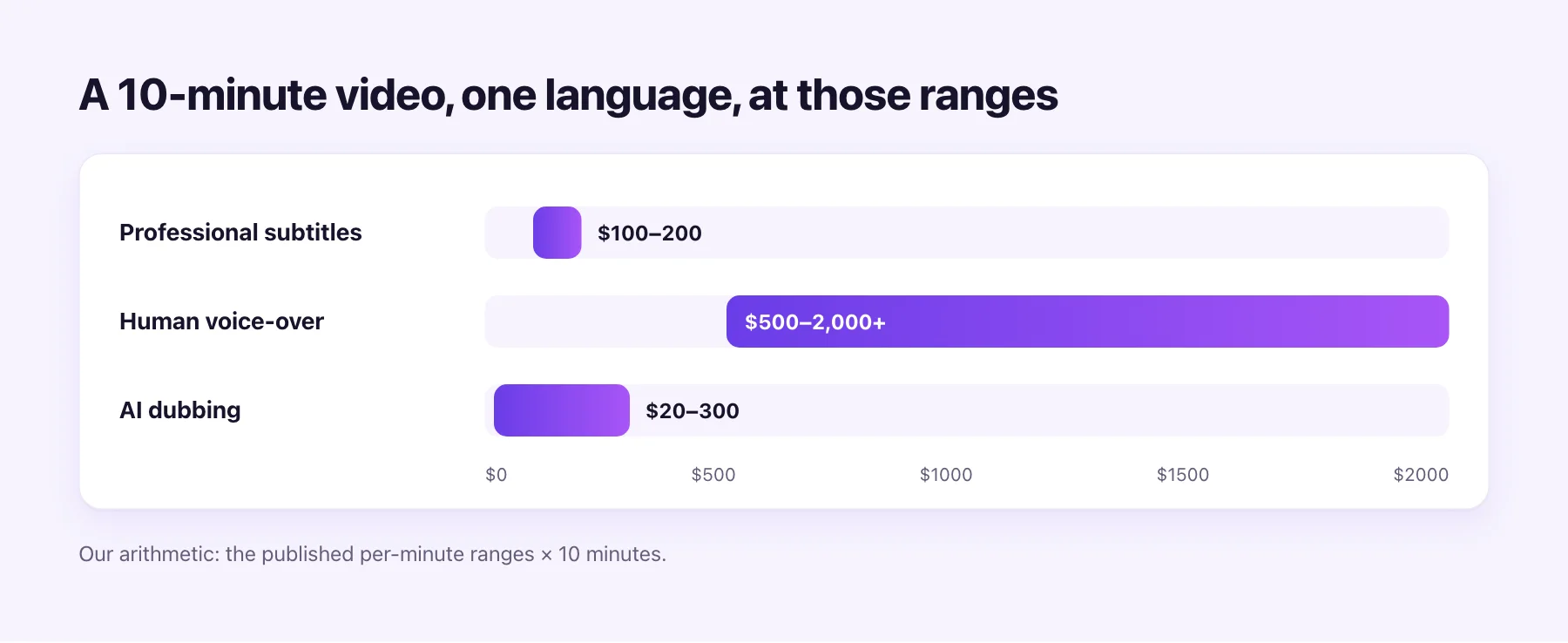
Multiplying the published ranges by 10 minutes, for one language:
- Professional subtitles: about $100–200.
- Human voice-over: about $500 to over $2,000.
- AI dubbing: about $20–300.
Add a second language and most of that repeats. A 10-minute video into five languages with human voice-over can easily pass $5,000.
What AI Video Dubbing costs
AI Video Dubbing prices by the minute of video, at one rate for each output:
| Output | Rate | 10 minutes | 30 minutes | 60 minutes |
|---|---|---|---|---|
| Subtitles | 0.2 credit / min | $0.71 | $2.14 | $4.28 |
| Dub | 1.5 credits / min | $5.35 | $16.05 | $32.11 |
| Lip-sync dub | 5 credits / min | $17.84 | $53.51 | $107.02 |
Those totals use the lowest price per credit, on the best-value plan. Without a plan, packs never expire: the Starter pack is $9.90 for 15 credits, enough to dub about 10 minutes, and the Max pack brings a dubbed minute down to about $0.90.
What's included at that rate:
- the voice learned from each speaker, or a library voice, at no extra cost;
- the translated MP4 with no watermark, and the dub as an audio-only file;
- subtitles as SRT and VTT, a bilingual subtitle file, and the transcript;
- the script review before voicing, and a glossary for your terms.
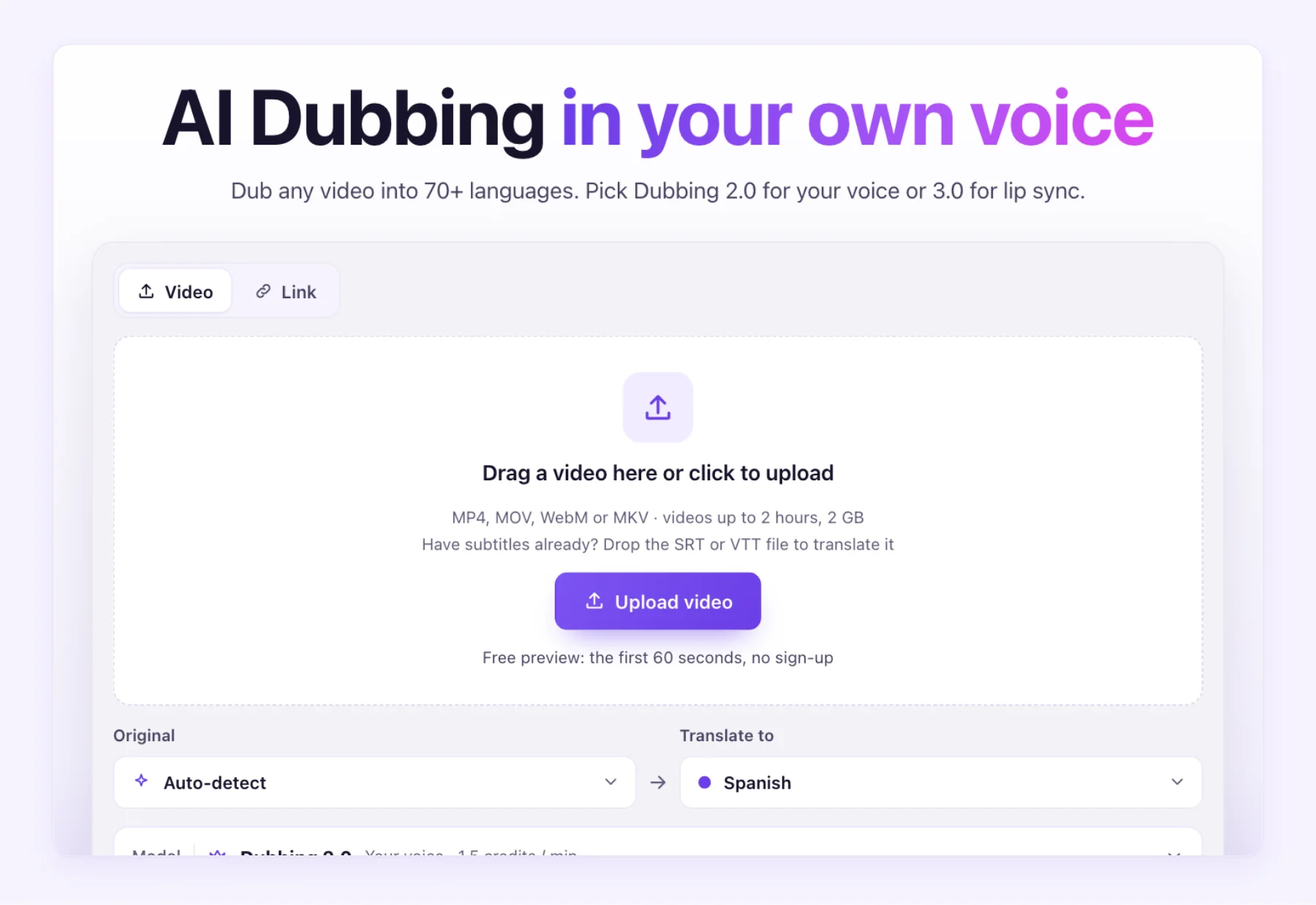
If a job fails, its credits return automatically. The first 60 seconds of any video are free with no sign-up, so you can hear the result first.
How to keep the cost down
Whatever you use, a few habits cut the bill without cutting quality:
- Trim before you upload. Intros, outros, sponsor reads and sections you'll cut anyway all count as minutes. With AI Video Dubbing you can trim in the upload step.
- Pilot one language. Dub your best video into your biggest new market first, and expand only when the numbers justify it.
- Pick the output per video. Lip sync costs more than a plain dub, and it only helps when a face fills the frame. Screen recordings, slides and B-roll sound the same with a plain dub.
- Start with subtitles where they're enough. Short clips watched on mute rarely need a voice at all.
- Fix the script, not the audio. Every change made in the text before voicing is free. Changes after voicing cost another run.
- Match how you pay to how often you publish. Packs suit occasional work because they never expire. A plan suits a steady schedule, and the yearly price is lower per month.
When to pay for humans
AI dubbing is not the right answer for everything. Pay for human actors when the performance is the product: drama, comedy, animation with characters, and high-stakes brand films where every intonation is directed. Many teams use both: AI for the long tail of tutorials, help videos and social content, and human dubbing for the few flagship pieces.
Questions to ask before you pay
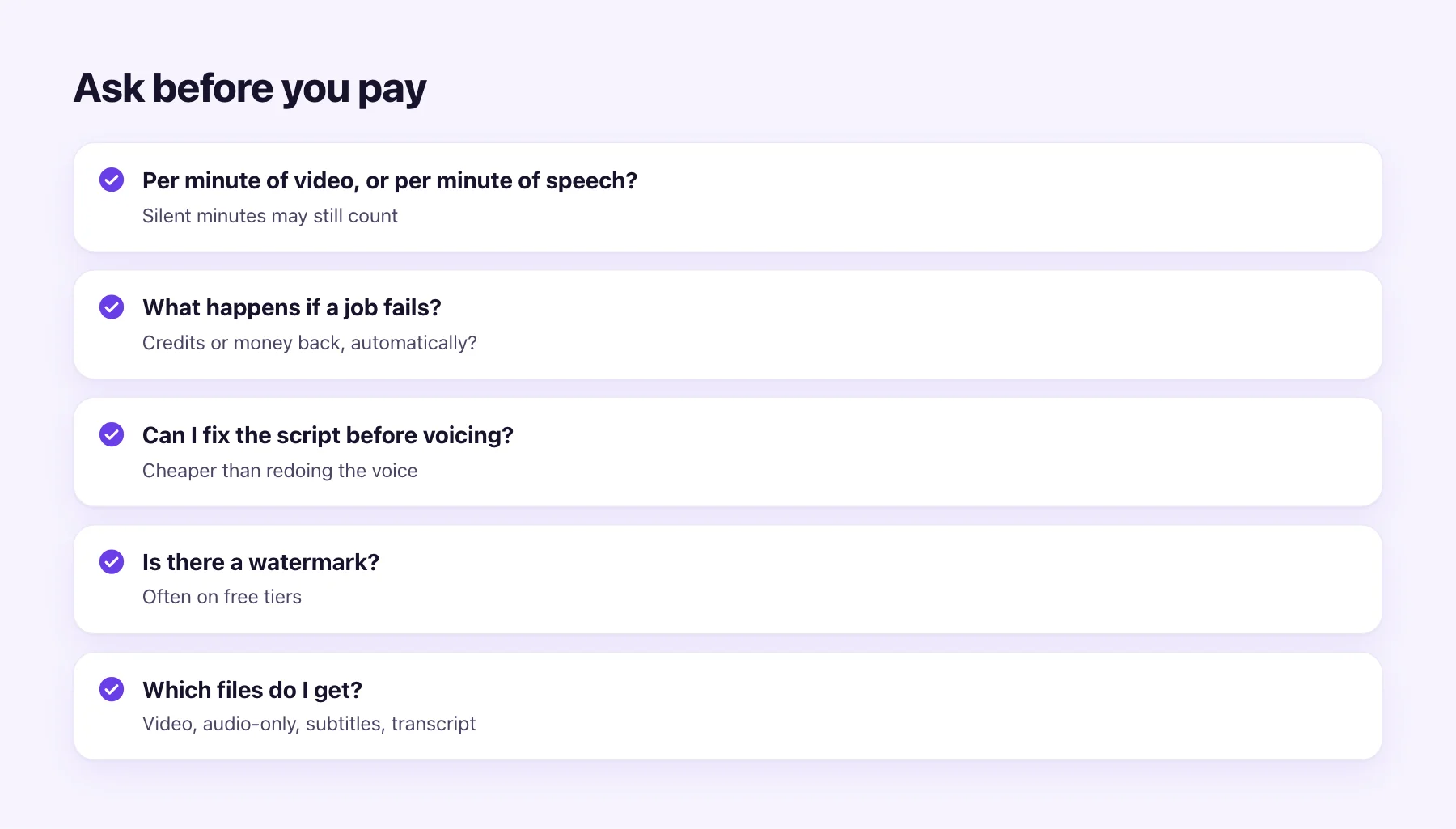
- Is the price per minute of video or per minute of speech? Silent stretches may still count.
- What happens if a job fails? Do credits or money come back automatically?
- Can I fix the script before it's voiced? That's far cheaper than redoing a voice.
- Is there a watermark? It's common on free tiers.
- Which files do I get? Video, audio-only, subtitles, transcript? Each missing file is extra work later.
With the answers in hand, quotes become comparable. For the choice between formats, see subtitles vs dubbing. For a direct product comparison, see our HeyGen video translate alternative page.