Subtitles vs Dubbing: Which Should You Use for Your Videos?
What the surveys say about subtitles and dubbing, what each is good and bad at, and a simple way to pick one, or both, for your videos.
On this page
Subtitles or dubbing is the first choice anyone makes when taking a video into another language. Film fans argue about it for hours. For creators, educators and marketing teams, the question is more practical: which one keeps viewers watching, at a cost that makes sense?
This guide looks at what surveys say about how people watch, what each format does well and badly, and a short way to decide. The answer is often "both", and that's easier than it used to be.
How many people actually use subtitles?
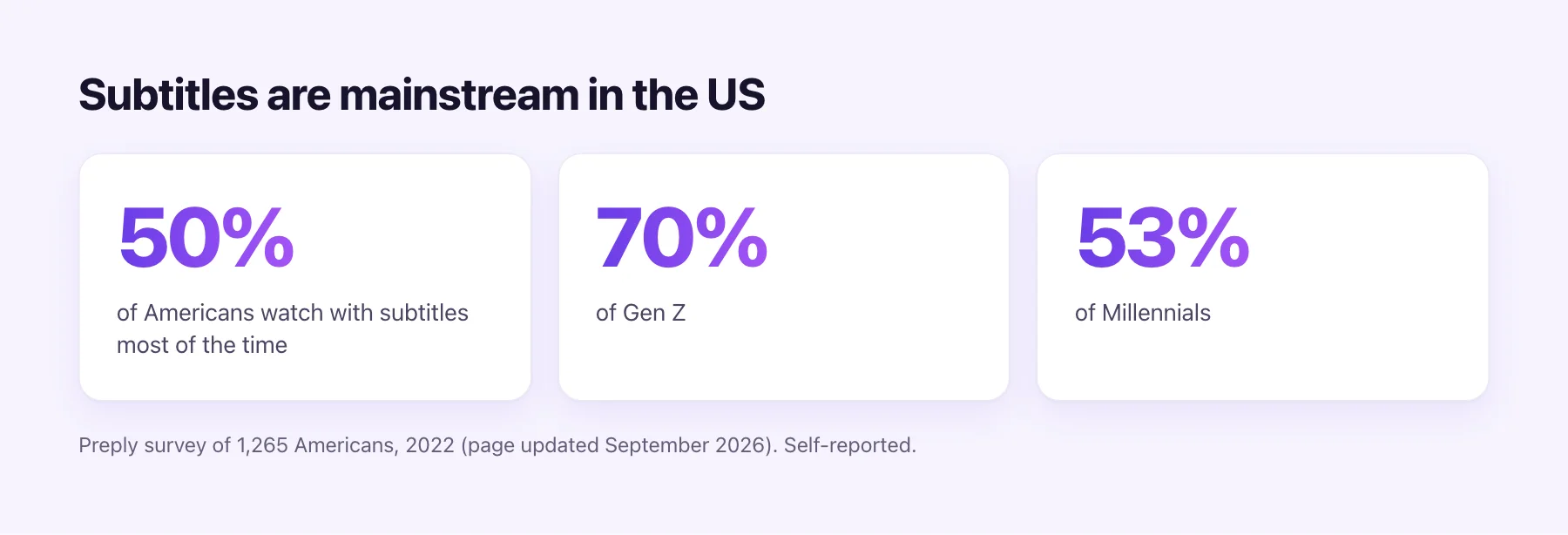
More than you might think, even in their own language. In a 2022 survey of 1,265 Americans by Preply, a language-learning company, half said they watch with subtitles most of the time. Among Gen Z it was 70%, and among Millennials 53%. Those numbers are self-reported and from one company, but the direction is clear: subtitles have become a normal way to watch, not a last resort.
Why do people turn them on?
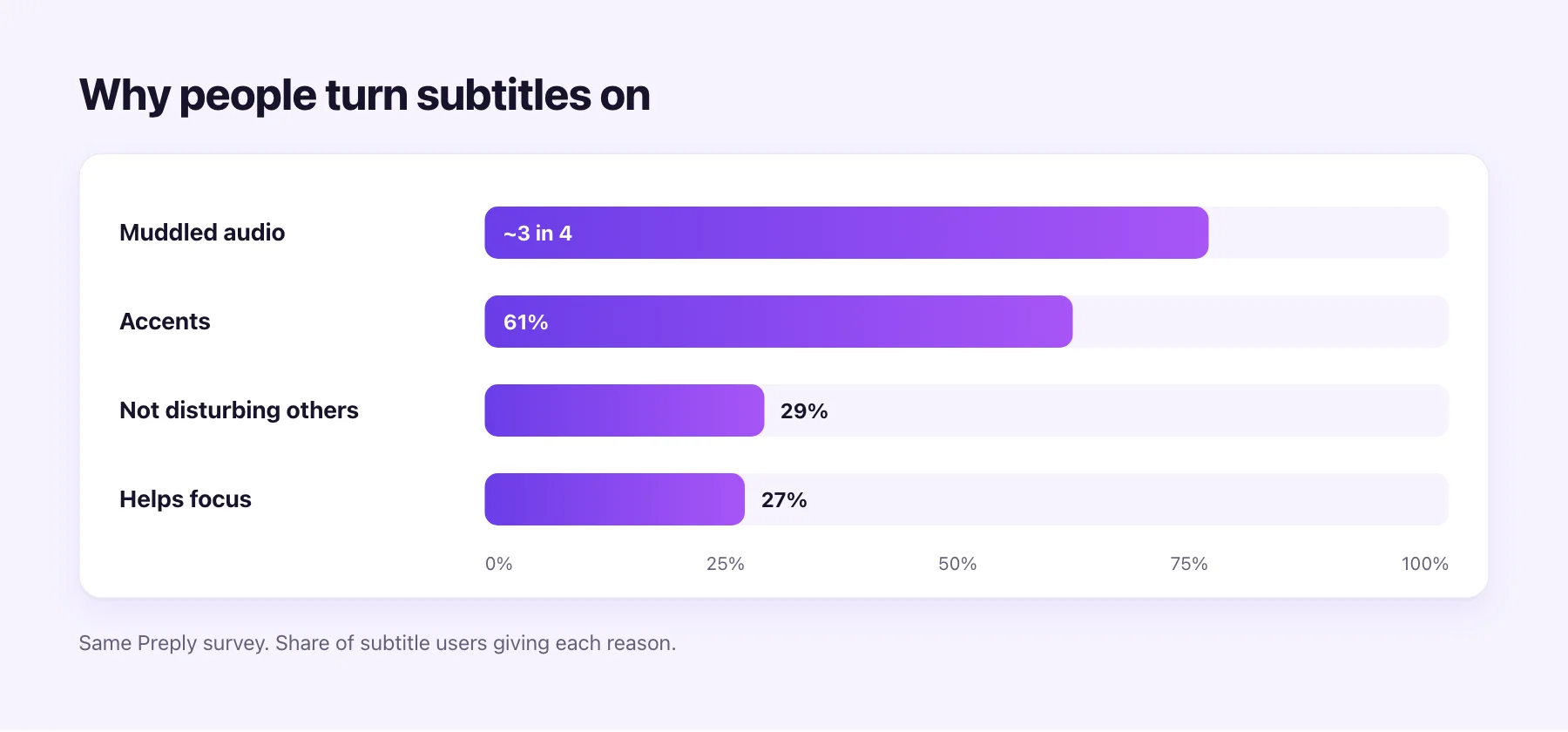
The most common reasons are muddled audio (about three in four), accents (61%), not wanting to disturb others (29%) and help with focus (27%). Notice what's missing: most people don't use subtitles because they prefer reading. They use them because the audio alone doesn't work for them in that moment.
Subtitles or dubbing for foreign films?
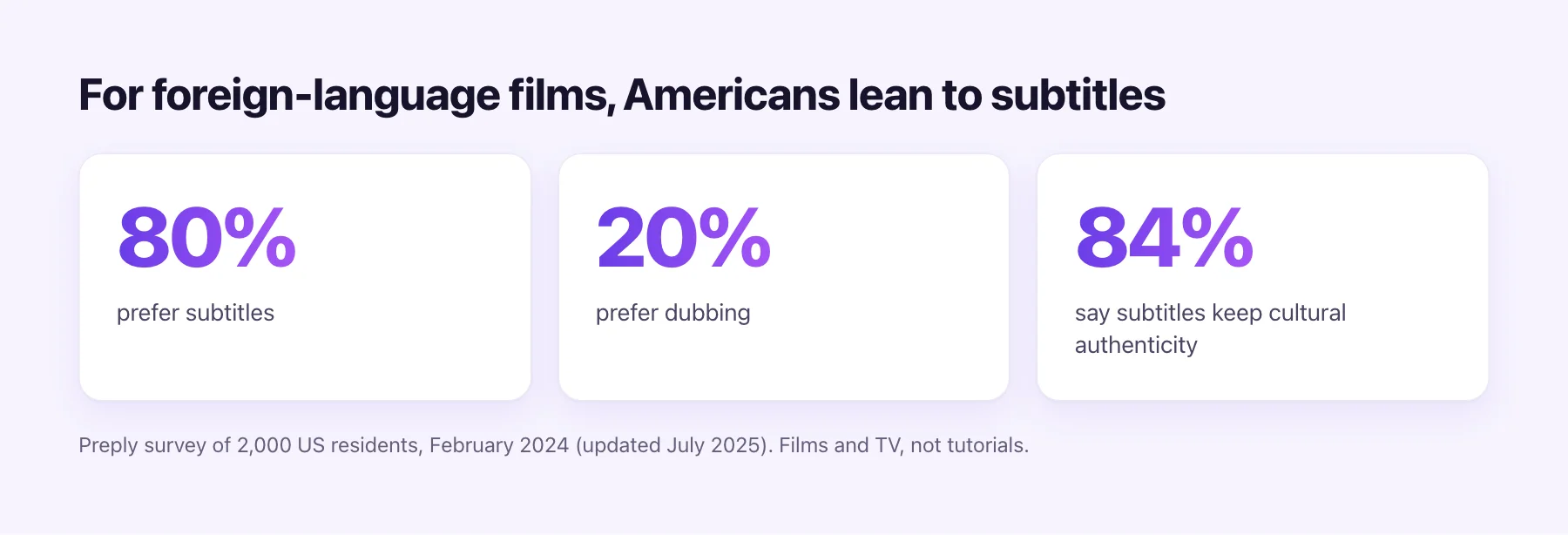
In a 2024 Preply survey of 2,000 US residents about foreign-language films and TV, 80% said they prefer subtitles and 20% dubbing. 84% said subtitles keep the cultural authenticity of the original, and 67% that they help with learning a language.
Two cautions before applying that to your videos. First, these are films and TV shows, where the actor's real voice is part of the art. Second, it's one country. Audiences in many countries grew up with dubbed TV and expect it. A tutorial on YouTube is a different kind of video, watched in different ways.
What each format is good and bad at
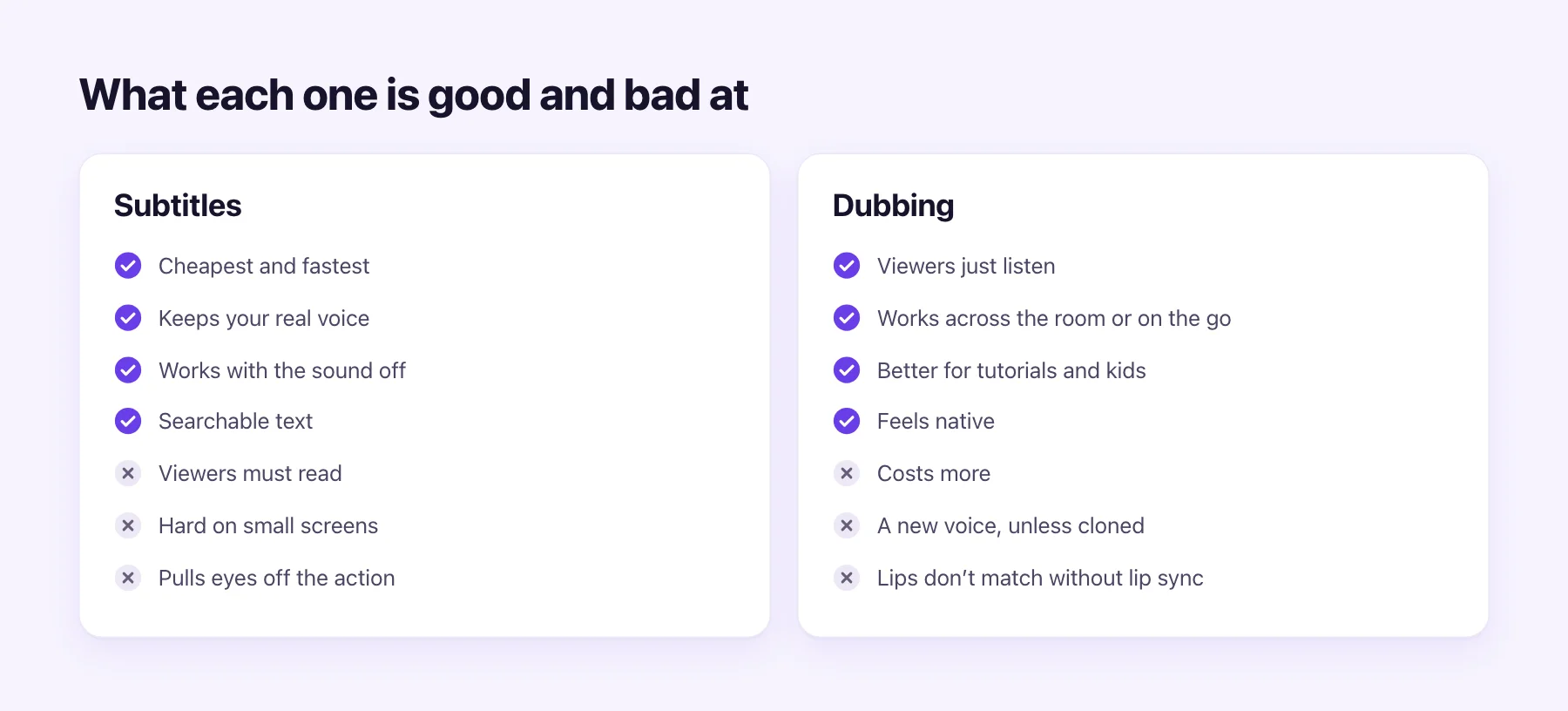
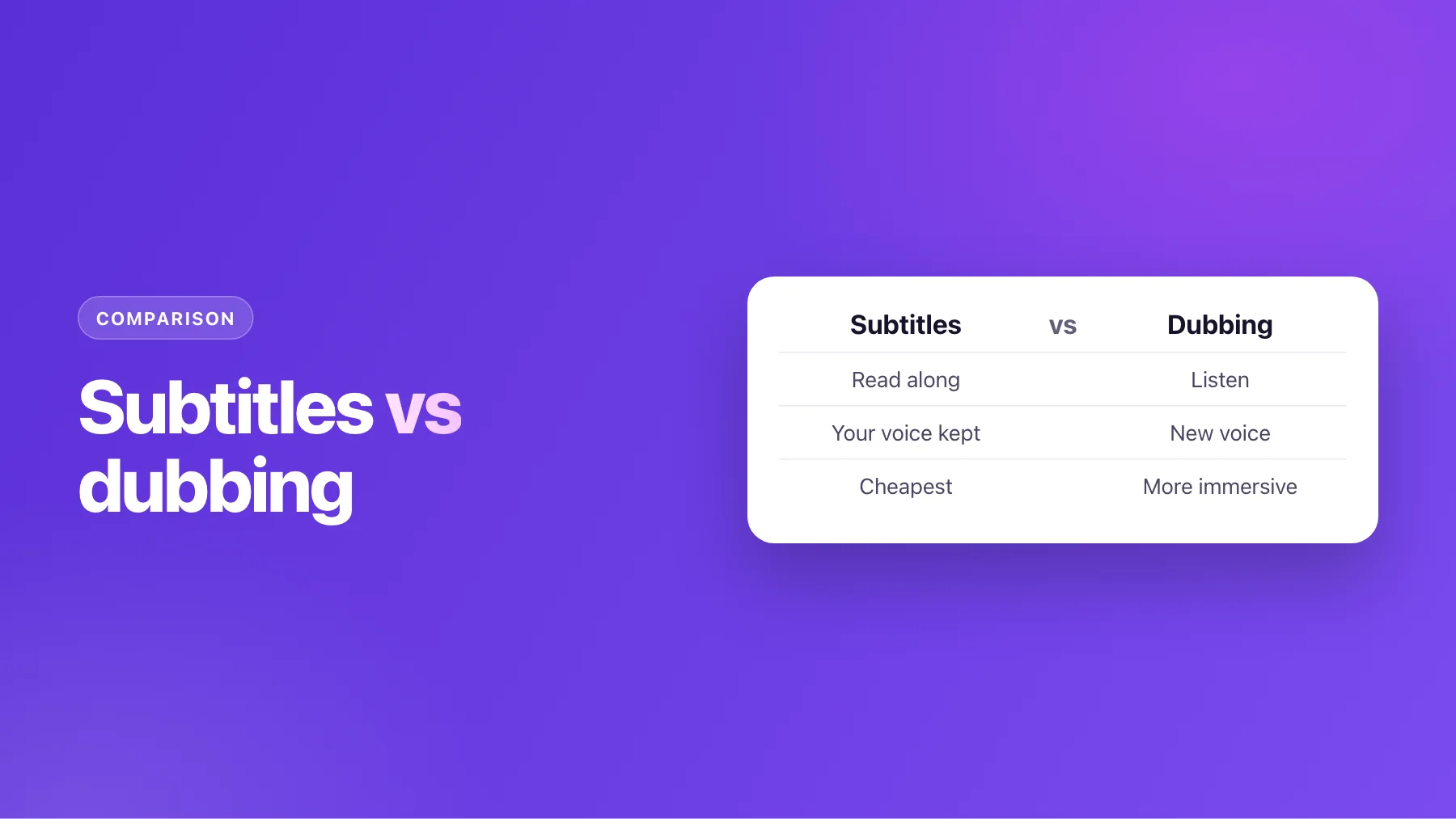
Subtitles are the cheapest and fastest way to translate a video. They keep your real voice, work with the sound off, and give search engines text to read. Their weakness is that viewers must read: hard on a phone held at arm's length, on a TV across the room, for children, and in any video where the eyes need to be on the action, such as a cooking or software tutorial.
Dubbing lets viewers simply listen. It works while they're doing something else, it suits learning content and children, and it makes the video feel native. Its traditional costs were price and the loss of the original voice. AI dubbing has cut the price, and a voice learned from the speaker keeps the personality. The remaining gap is lip movement: without lip sync, a dubbed face talking to camera doesn't quite match.
| Subtitles | Dub | Lip-sync dub | |
|---|---|---|---|
| Viewer effort | Read along | Just listen | Just listen |
| Your voice | Kept, in the original language | Learned and reused in the new language | Learned and reused in the new language |
| Works on mute | Yes | No | No |
| Picture changed | No | No | Mouth redrawn |
| AI Video Dubbing rate | 0.2 credit / min | 1.5 credits / min | 5 credits / min |
Making subtitles
If subtitles are the right call, the AI subtitle generator writes down what's said, with timing taken from the speech, and translates it into the language you pick.
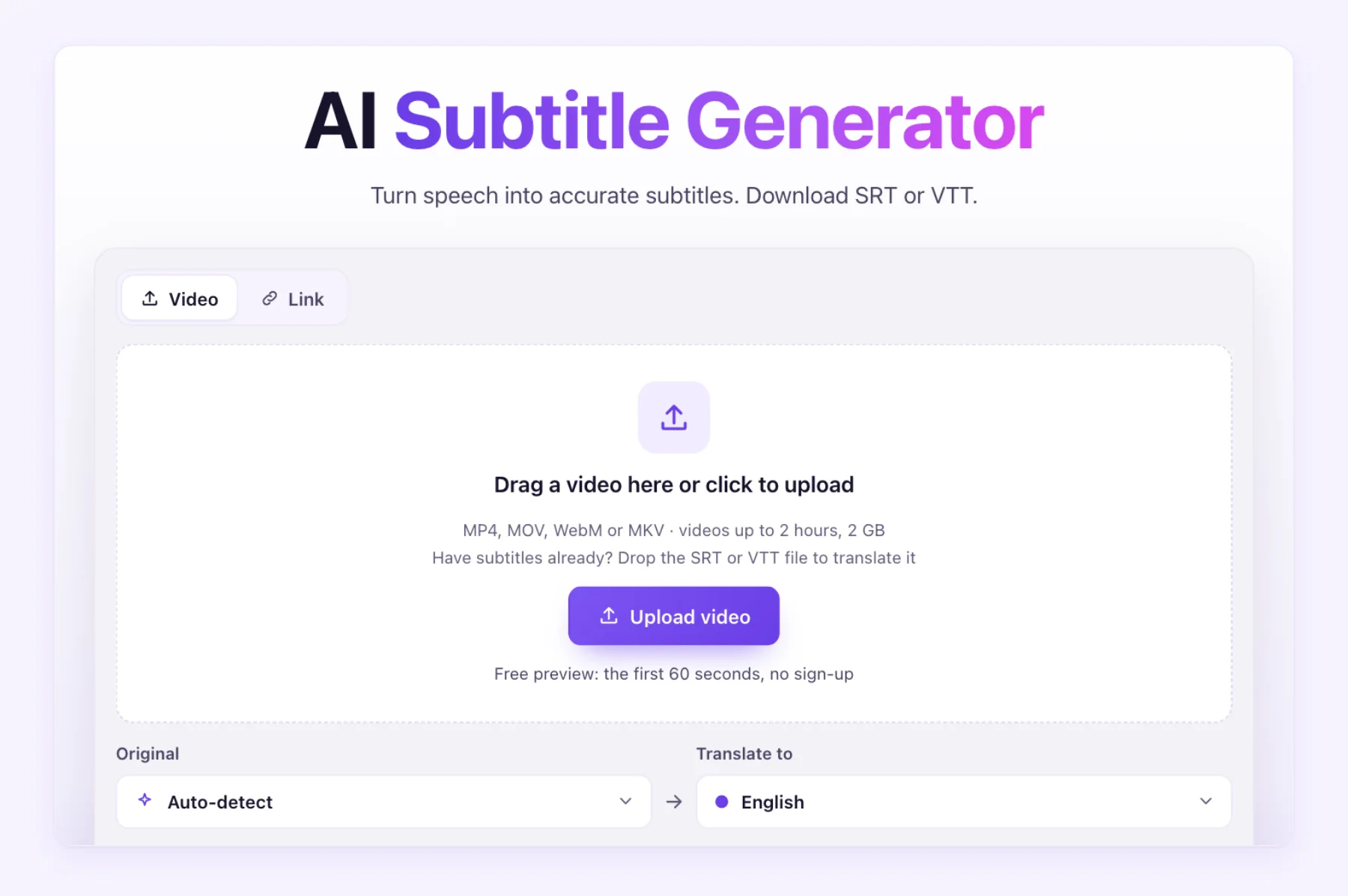
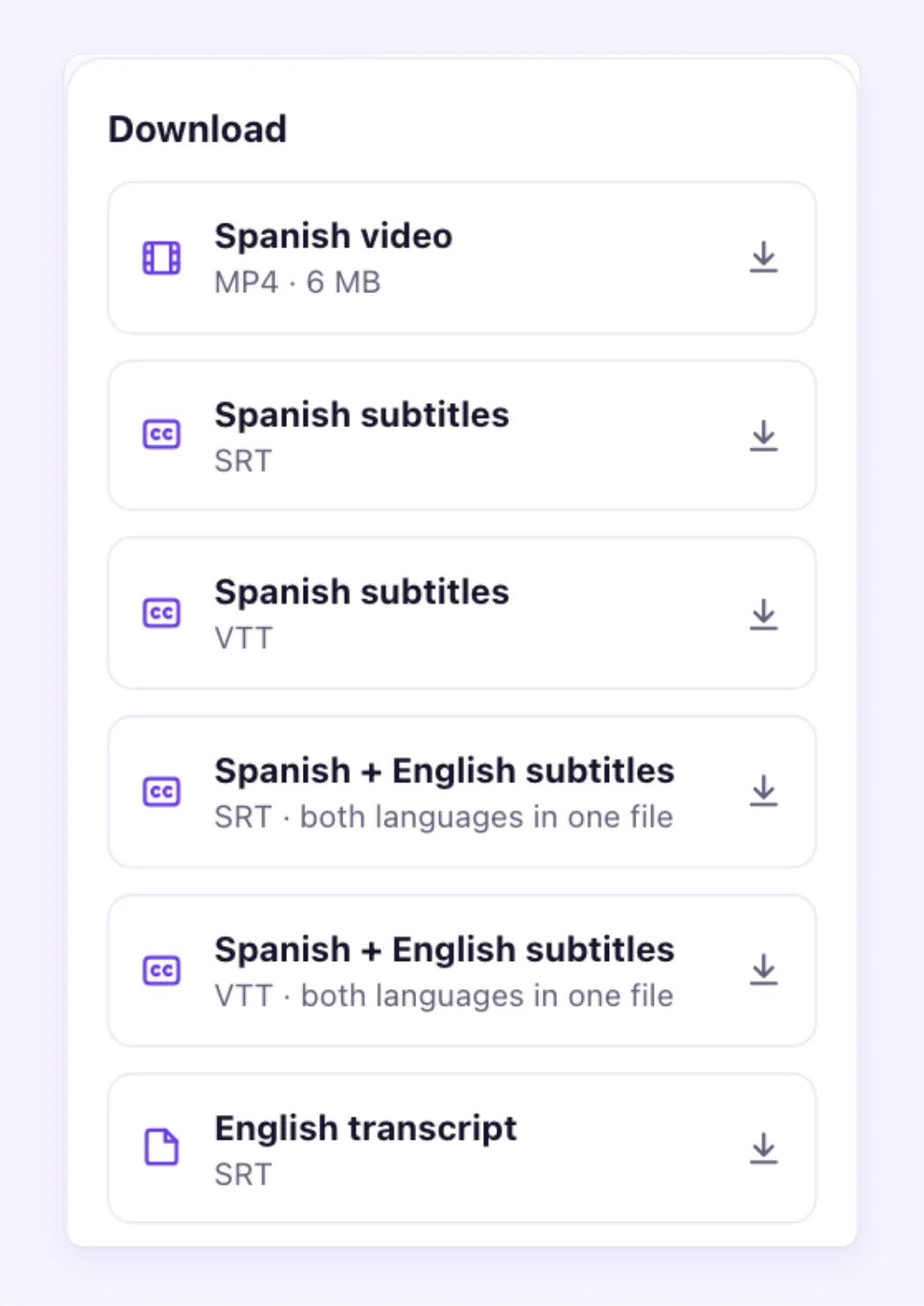
You check every line before downloading, and you get the translation as SRT and VTT, a bilingual file with both languages, and the original-language transcript. If you already have subtitles, you can translate the SRT file directly.
What makes subtitles easy to read
Good subtitles are short, well timed and split in sensible places. Netflix's English style guide, one streamer's house rules rather than a law, sets a useful benchmark:
| Rule | Netflix English (USA) style guide |
|---|---|
| Characters per line | 42 at most |
| Lines on screen | 2 at most |
| Reading speed | Up to 20 characters a second, 17 for children's content |
Translations usually run longer than the original, which pushes against those limits. When a line feels crowded, shorten the translation rather than squeezing it: viewers would rather read a slightly simpler sentence than miss half of a long one. Break lines between phrases, not in the middle of a name or a number.
What makes a dub sound natural
A dub sounds natural when the voice fits the speaker, the pace fits the picture, and the translation sounds like something a native speaker would say. A voice learned from the speaker handles the first. The second and third come from the script review: if a translated line is much longer than the original, the voice has to hurry, so trim it. Read the translation aloud once; anything awkward to say will sound awkward when voiced.
Making a dub, and getting the subtitles too
A dub starts with the same transcript and translation, then voices each line in the speaker's own voice and mixes it over your original music and effects.
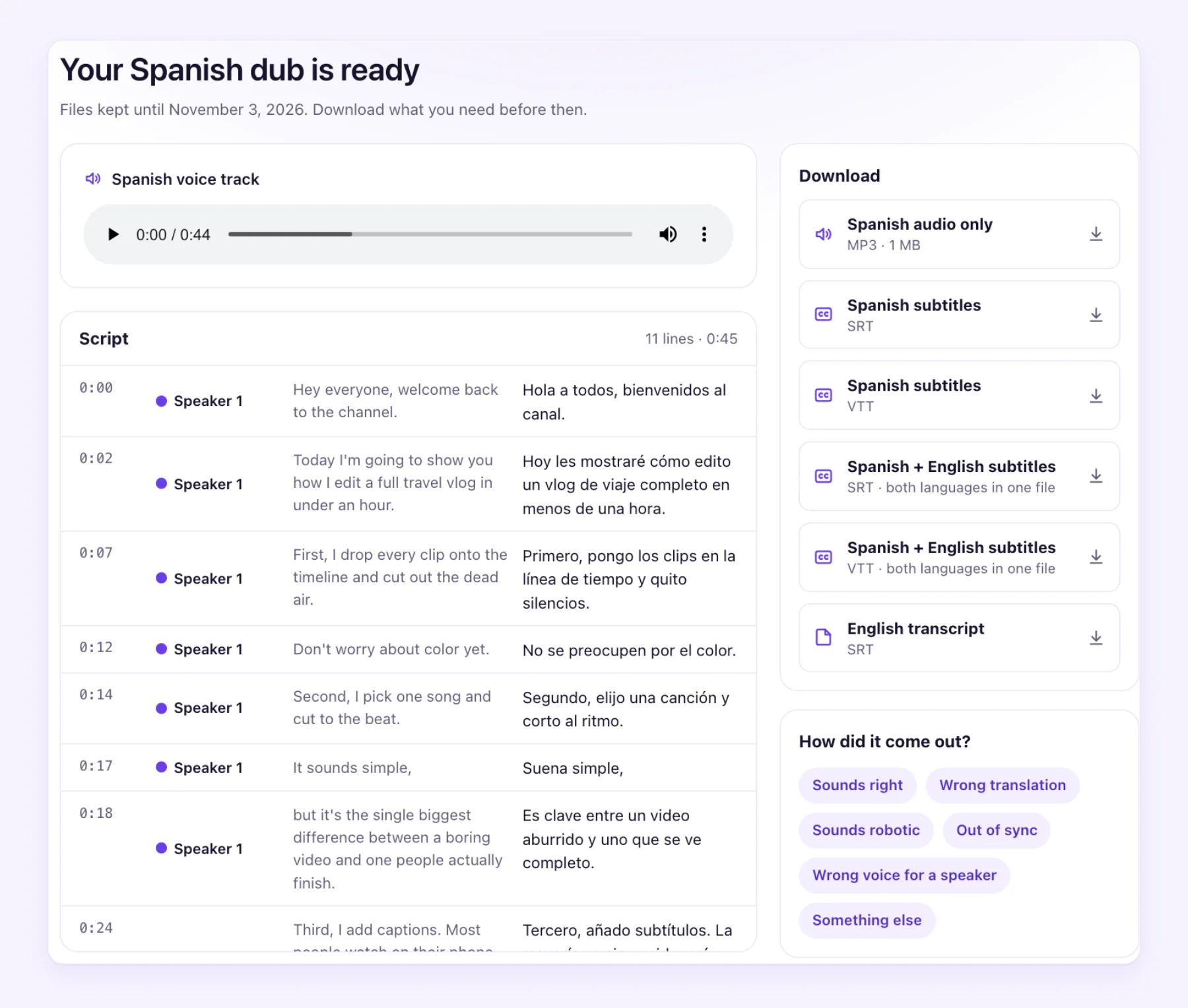
Every dub also comes with the subtitle files, so choosing a dub doesn't mean giving up subtitles. That's why "both" is often the best answer: viewers who like to listen hear the dub, and viewers who watch on mute or want to read along turn on the captions.
So which should you use?
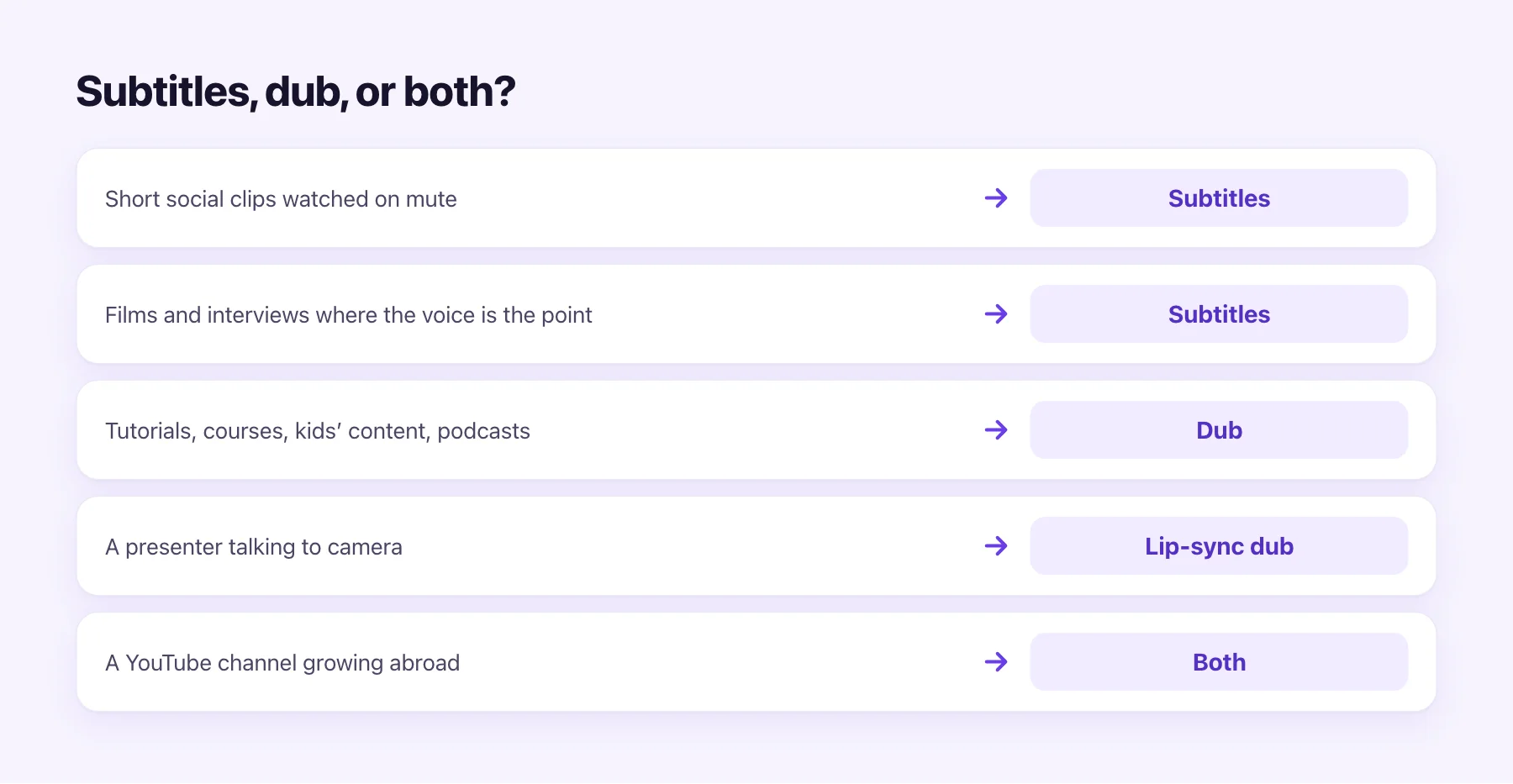
- Short social clips watched on mute: subtitles. Most feeds start videos silently.
- Films, interviews and anything where the voice is the point: subtitles keep the real performance.
- Tutorials, courses, children's content and podcasts: a dub. Viewers need their eyes, or simply prefer to listen.
- A presenter talking to camera, ads, talking heads: a lip-sync dub, so the mouth matches the words.
- A YouTube channel growing abroad: both. Add the dub as an audio track and the subtitles as captions, on the same video.
Test it on your audience
Surveys describe averages; your viewers are specific. The cleanest test is to publish one video both ways in your most important new language and compare watch time over a few weeks. With AI Video Dubbing, the first 60 seconds of any video are free, so you can hear a dub of your own video before spending anything. For costs beyond our own, see what video dubbing costs.